Anthropic acquires Stainless is the sort of headline many readers are tempted to skip. It sounds too developer-facing, too infrastructural, too far from the visible AI drama of models, demos, and personalities. That would be a mistake. This is one of those deals that looks like plumbing until you realize the whole next phase of the AI market may be decided by plumbing.
Anthropic announced the acquisition on May 18, 2026 and described Stainless as a leader in SDKs and MCP server tooling. The company also said Stainless has powered every official Anthropic SDK since the earliest days of the Claude API. That is already a meaningful clue: Anthropic is not buying a random adjacent startup. It is pulling a critical connection layer closer to the core.
What Stainless actually does
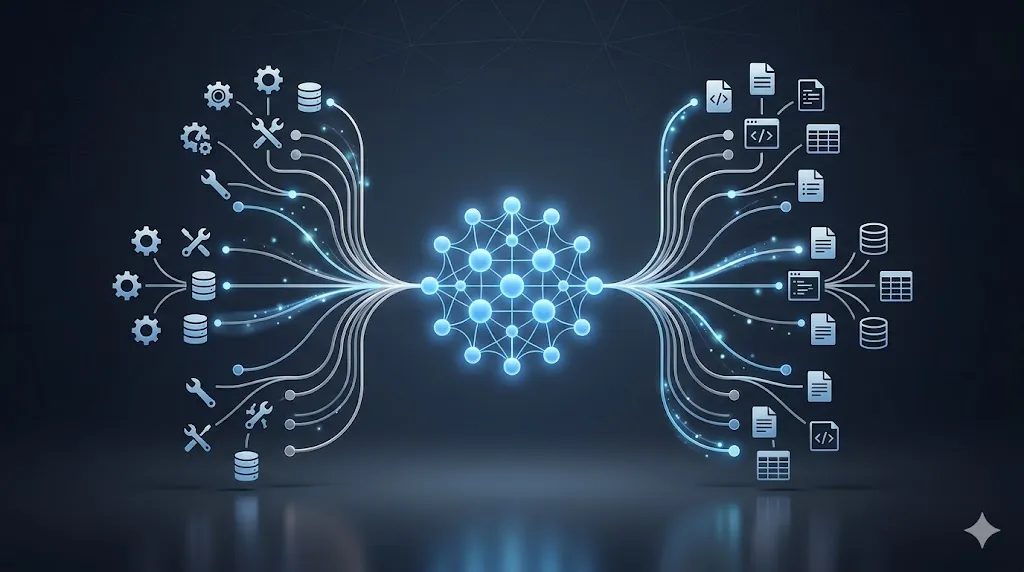
According to Anthropic, Stainless turns an API specification into SDKs across TypeScript, Python, Go, Java, and more, and is relied on by hundreds of companies to generate SDKs, CLIs, and MCP servers. That may sound like a specialized developer concern, but the implication is broad. These are the libraries, command-line tools, and connectors that determine whether developers and agents can reliably use an API in the first place.
In other words, Stainless works on the layer between platform capability and platform usability. Models can be brilliant. If the access layer is awkward, brittle, or inconsistent across languages and tools, the real product experience still feels worse than it should.
Why Anthropic wanted this in-house
The official announcement says the frontier is shifting from models that answer to agents that act, and that agents are only as capable as the systems they can reach. That is the cleanest explanation of the deal. Anthropic is buying connection quality.
Anthropic acquires Stainless because agent value is moving outward from the model. Once users ask Claude to operate across files, apps, APIs, and business systems, the bottleneck is no longer only reasoning. It becomes developer experience, integration reliability, and the speed at which a platform can expose clean, trustworthy paths into real tools.
Why this matters more in the MCP era
MCP changed the conversation by making tool connectivity feel less like an optional enhancement and more like the basic grammar of agentic software. If agents are meant to do useful work, they need a stable way to touch the systems around them. Anthropic created MCP to help make that possible. Stainless gives Anthropic a stronger way to industrialize the developer layer around that ambition.
This is why the acquisition should not be read as a narrow API maintenance play. It is a platform-control move. The company wants Claude to be easier to build on, easier to integrate, and harder to dislodge once teams start wiring it into their actual workflows.
What users and developers will care about in practice
For developers, the practical promise is cleaner SDKs, CLIs, and MCP servers that feel native instead of bolted on. For less technical users, the benefit is indirect but still real. Better tooling behind the scenes tends to shape the apps, connectors, and workflows that reach the surface. When the platform plumbing gets better, the visible products usually get smoother a few steps later.
The practical concern layer is just as important. Buyers do not want more agent theory. They want fewer brittle integrations, fewer one-off hacks, and fewer moments where a model seems smart until it touches the outside world. If Anthropic can use Stainless to reduce that fragility, the acquisition will matter well beyond the developer audience that first notices it.
What this says about the agent race
The lesson is simple: the next contest is not only model versus model. It is platform versus platform. The winners will be the companies that combine reasoning quality with dependable access to data, tools, and system actions.
Anthropic acquires Stainless because the company appears to understand that agents fail in embarrassingly ordinary ways. They fail when the connector is weak, the SDK is clumsy, the API wrapper feels foreign, the handoff breaks, or the action layer becomes too fragile to trust. Those are not glamorous failures, but they are the ones that decide whether an agent becomes habit-forming or abandoned.
What public reaction tends to get right
Early reaction has already converged on the same practical point. In developer discussions, people are less focused on acquisition drama than on what Anthropic now controls: the SDK factory, a major MCP server generator, and a larger share of the path from API spec to usable agent tooling. That reaction is useful because it treats the deal as a workflow story, not a vanity story.
The second reading is more persuasive. The companies that treat tool access and developer experience as first-class product surfaces are usually the ones building for the long race, not the headline cycle.
Bottom line
Anthropic acquires Stainless is not a side note to the AI story. It is a clue about where the real work has moved. Once the model is good enough to tempt people into serious workflows, the hard part becomes connection quality: SDKs that feel native, CLIs that do not fight the user, MCP servers that expose tools cleanly, and an action layer sturdy enough to trust.
That is why this deal matters. Anthropic is spending on the part of the agent stack that turns capability into usability. It may not be the loudest move in AI this month, but it is one of the more revealing ones.
FAQ
Why did Anthropic acquire Stainless?
Anthropic says the frontier is shifting toward agents that act, and Stainless strengthens the SDK, CLI, and MCP server tooling those agents depend on.
What does Stainless do?
According to Anthropic, Stainless generates SDKs, CLIs, and MCP servers from API specifications across languages including TypeScript, Python, Go, and Java.
Why should non-developers care?
Because better connection tooling behind the scenes usually leads to more reliable apps, integrations, and agent workflows in the products ordinary users eventually touch.
Related reading
- Simple AI Workflows: 5 Practical Ways to Save Time
- Interactive Code Blocks in ChatGPT: 5 Easy Things Even Non-Coders Can Try
- AI Tool Comparison: 7 Questions to Ask Before You Pay