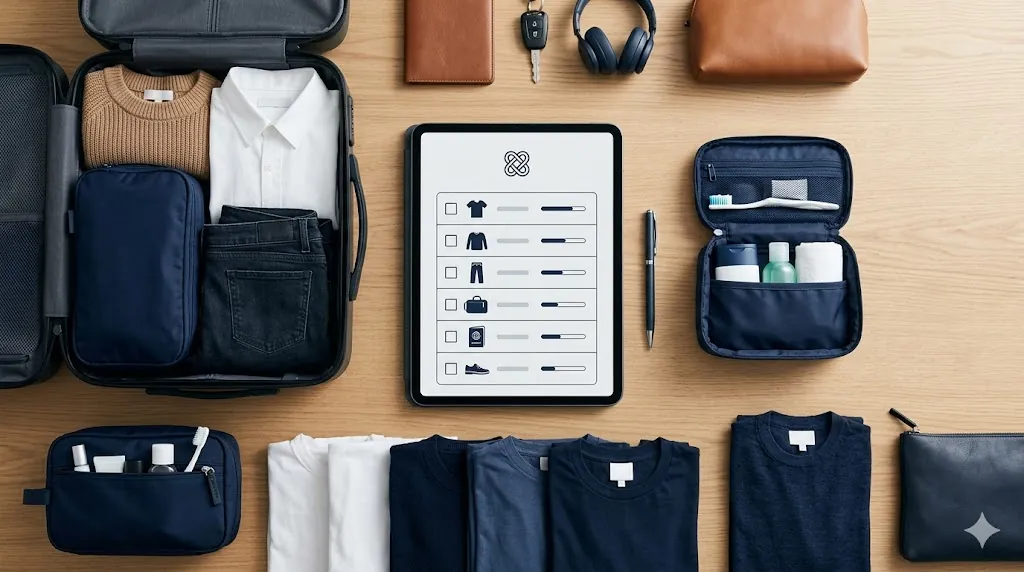
An AI packing list planner is most useful when your trip is short, your bag is small, and your margin for forgetting something is even smaller. Weekend trips and short flights create the same familiar problem: you want to travel light, but you do not want to land and realize you forgot medication, chargers, or a jacket that actually matches the forecast.
The practical way to use AI here is not to ask for a magical master list. It is to give the model a few grounded inputs, let it draft a first-pass checklist, and then verify the travel rules that AI should never guess. The result is a calmer planning workflow, not blind automation.
- An AI packing list planner works best when you provide trip length, destination weather, activities, and baggage limits up front.
- Use AI to organize and personalize the list, not to invent flight safety or airport screening rules.
- Before you fly, verify liquids, batteries, medications, and airline bag limits against official sources.
- For short trips, the biggest win is reducing overpacking, not building a complex travel system.
Table of Contents
- Why Use AI for a Short-Trip Packing List
- What to Gather Before You Prompt
- A Simple AI Packing Workflow
- Prompt Template
- Worked Example: 2-Night Short Flight
- What Travelers Actually Like and Still Double-Check
- What You Still Need to Verify Manually
- Common Mistakes
- FAQ
- Related Reading
- Source
Why Use AI for a Short-Trip Packing List
Short trips create a narrow planning problem that AI handles well. You already know the broad categories you need: clothes, toiletries, devices, documents, and any trip-specific extras. What slows people down is deciding quantity, checking edge cases, and remembering the one or two non-routine items that fit the destination or schedule.
That makes this a good beginner workflow. The task is specific, the output format is simple, and the risk stays manageable if you keep one rule in place: AI organizes the first draft, while official sources settle the rules.
What to Gather Before You Prompt
Your result improves quickly when the input is concrete. OpenAI’s current prompting guidance says to outline what you want, who it is for, and why it matters. For packing, that means giving the model enough context to make tradeoffs instead of asking for a generic vacation list.
Trip basics
Start with dates, destination, trip length, and whether you are checking a bag or flying carry-on only. A weekend road trip and a two-night flight with one personal item are not the same planning problem, even if both look short on the calendar.
Weather and activity context
Add the expected temperature range, rain risk, and the activities that matter. A short city break, a wedding weekend, and a work trip each need different shoes, layers, and backup items. Weather also changes the weight of your list faster than most people expect, so it helps to check the latest forecast before you finalize the prompt.
Personal constraints
Include your own habits and non-negotiables: prescription medication, contact lenses, a laptop, workout clothes, baby items, or a preference for doing laundry versus packing an extra outfit. The CDC’s current travel health kit guidance explicitly says suggested contents should be personalized. Your packing prompt should do the same.
A Simple AI Packing List Planner Workflow
1. Write a one-minute trip brief
Before you ask AI for anything, write a small brief in plain language. Include destination, dates, forecast, trip purpose, baggage limit, and any special items. This step matters because it forces you to decide what the trip actually is before you ask for optimization.
2. Ask for categories first, not just one long list
Request a categorized checklist with sections such as clothes, toiletries, documents, tech, medications, and airport-specific items. That makes the output easier to scan and easier to edit. It also helps you notice where the model is making assumptions, such as suggesting extra outfits for a trip that only has one evening out.
3. Ask the model to justify quantities
This is a small upgrade that saves space. Instead of only asking what to pack, ask why it suggested each clothing quantity for your trip length. That pushes the model toward useful logic like “two tops plus one spare” rather than automatic overpacking.
4. Ask for a lighter second version
Once you get a solid first pass, ask for a carry-on-light version that removes duplicates, suggests re-wear items, and flags things that can be bought on arrival if needed. For weekend travel, this is often where the real value appears.
5. Verify the rules outside the chat
This is the non-optional human step. The FAA’s PackSafe guidance and TSA screening rules change the final answer more than any clever prompt does. Use AI to prepare the checklist, then use official travel sources to confirm what can go in carry-on or checked baggage.
Prompt Template
You can use this template as a starting point:
I need an organized packing checklist for a short trip. Plan for a [trip type] to [destination] from [dates]. I am packing [carry-on only / personal item only / one checked bag]. Forecast is [weather details]. Activities include [activities]. Personal must-pack items: [medications, devices, clothing needs, etc.].
Create a checklist with these sections: clothes, toiletries, tech, travel documents, health items, and optional extras. Suggest realistic quantities for a [number]-night trip. Keep the list light, explain any quantity choices that may lead to overpacking, and add a short “verify before flying” section for airline and airport rules.
This works because it gives the model a role, a goal, and clear output structure. It also prevents the most common beginner mistake, which is asking AI to “make me a packing list” with no baggage or weather constraints.
Worked Example: 2-Night Short Flight
Imagine a Friday evening to Sunday evening flight to Chicago in late October. You plan to bring one carry-on, attend one dinner, walk a lot, and work from a laptop for part of Saturday. Forecast shows cool temperatures and possible rain.
A strong AI response should not only list items. It should make small, useful decisions: one jacket instead of two, shoes that work for both walking and dinner, one charger pouch for all cables, and a reminder to keep medication and the power bank accessible in carry-on baggage. If the response starts recommending bulky “just in case” extras, that is the moment to revise the brief and ask for a lighter version.
A practical final list for this kind of trip often looks like this:
- Two everyday tops, one spare layer, one jacket, one sleep set, one extra pair of socks and underwear.
- One pair of primary shoes and no duplicate pair unless the activity genuinely requires it.
- Travel-size toiletries that fit the carry-on screening rules.
- Laptop, phone, charger, and power bank packed in an easy-to-reach area.
- ID, wallet, itinerary, medication, and any weather-specific add-ons like a compact umbrella.
What Travelers Actually Like and Still Double-Check
Public behavior around packing tools is pretty consistent: travelers like getting the first version of the list built for them, especially when the trip includes several moving parts like weather, dinner plans, workouts, or a laptop setup. The real win is not that AI knows your suitcase better than you do. The win is that it removes the blank-page problem and gives you something specific to react to fast.
At the same time, people tend to distrust AI on the same categories for good reason. Airline baggage limits, lithium battery rules, medication handling, and carry-on liquid rules are the items most travelers still want to verify themselves. That caution usually leads to the best results. The AI draft handles clothing, accessories, and reminders well, while the traveler confirms the few rules that could actually cause airport trouble.
That pattern is useful because it keeps expectations realistic. A good AI packing list planner should save thinking time, not create false confidence. If it helps you remember the umbrella, power bank, jacket, or second charger, it is doing real work. If it makes you skip the final TSA or airline check, it is being used the wrong way.
What You Still Need to Verify Manually
Liquids in carry-on baggage
TSA’s 3-1-1 rule still matters for short flights. If you are carrying liquids, gels, or aerosols through security, they need to fit the current size and bag limits. AI may remember the general idea, but you should confirm the actual rule on the TSA site before you pack.
Power banks and spare batteries
The FAA’s PackSafe guidance says spare lithium batteries and power banks belong in the aircraft cabin, not checked baggage, and larger battery limits also apply. TSA’s battery guidance also notes that passengers should check with their airline about any limits on the number of personal devices carried. This is exactly the kind of rule an AI checklist should flag but not finalize for you.
Health items and medication
The CDC’s Yellow Book guidance is a useful reminder that travel health kits should be personalized. For a short trip, that may simply mean prescription medication, pain relief, contact lens supplies, and anything you would have a hard time replacing on arrival. The point is not to bring a clinic. It is to avoid preventable friction.
Airline bag size and weight rules
Even when TSA or FAA rules are clear, airlines can be more restrictive about baggage size, weight, and personal-item dimensions. If your AI list assumes one carry-on plus one backpack, make sure your ticket and airline policy actually allow that setup.
Common Mistakes
- Using a vague prompt with no weather, baggage, or activity details.
- Letting AI guess airport security rules instead of checking TSA and FAA guidance directly.
- Keeping every optional suggestion instead of asking for a lighter second version.
- Treating a generic packing list as personal advice when medication, climate, and trip purpose vary by traveler.
- Forgetting that airline-specific baggage limits may be stricter than the general travel guidance.
FAQ
Is an AI packing list planner actually worth using for a weekend trip?
Yes, if you use it to reduce decision fatigue rather than to replace judgment. The time savings come from faster organization and fewer forgotten basics.
Should I trust AI to tell me what is allowed in my carry-on?
No. Use AI to surface likely issues, then confirm them with TSA, FAA, and your airline before you fly.
What is the best input for a packing prompt?
Trip length, destination weather, planned activities, baggage type, and personal must-pack items are the highest-value inputs.
Can AI help me pack lighter?
Usually yes. Ask it for a second-pass minimalist version and tell it to remove duplicate “just in case” items unless there is a strong reason to keep them.
Related Reading
Source
- OpenAI Academy, Prompting fundamentals, published April 10, 2026
- Transportation Security Administration, What is the 3-1-1 liquids rule?
- Transportation Security Administration, What Can I Bring? battery guidance
- Federal Aviation Administration, PackSafe for Passengers, last updated December 19, 2025
- CDC Yellow Book, Travel Health Kits, updated April 23, 2025